
Top 10 Best Things To Do In Porto On Your First Visit
While you may have heard of it for its famous Port wine, Porto offers many more delightful things than its staple export. This city is the coastal hub of northern Portugal and is renowned for its beauty and spectacular assortment of regional attractions.
The six famous Porto bridges, the medieval Ribeira district, and the streets of Porto all bustle with eager crowds and attractive storefronts. Porto is confident and dynamic, wearing its incredible history on its sleeve and keeping its unique culture alive through great art, architecture, and food.
You can taste the incredible richness of Porto’s culture through sweet Port wine and decadent Portuguese cuisine. This richness is palpable in the air as you walk through the historical cobble streets, pastel Baroque buildings, and cathedrals lining the River Douro. Creativity dating back centuries permeates the city, making it a unique and awe-inspiring destination for any traveler.
And no matter what your favorite things to do, it’s inevitable that there’s plenty you’ll find fascinating in Porto! From personal experience and research across the Internet, we’ve gathered some of the best things you can do on your next visit to Porto Portugal.
1. Walk The Streets Of The Cais Da Ribeira District
Synonymous with the image of Porto, Cais da Ribeira exudes excitement with the hustle and bustle of pedestrians through its streets and the boats swimming the River Douro day and night. Cobblestone streets wind through the city, lined with pop-in shops, art galleries, museums, and cafes that you’ll never get tired of visiting. And if you do somehow bore of Cais da Ribeira, the impressive metal double-decker Luis I Bridge offers direct access to Vila Nova de Gaia.
If you’re looking to dive deep into everything the Cais da Ribeira district offers, one of the best must-see attractions is the games and informational boards in the museums around the area. While many might be uninterested in ‘working their brain’ during a vacation, you’ll find that it makes the whole experience so much more enriching when you learn about history and stories to contextualize the beautiful city that stands before you!
And, of course, you can’t forget to enjoy all of the bars and restaurants that line nearly every corner of the city. No matter if you prefer a new take on international cuisine or would prefer a classical interpretation of authentic Portuguese cuisine, there’s something to suit every palate and budget in Cais da Ribeira.
2. Tour The Palacio Da Bolsa
Situated right in the center of Porto, the Palacio da Bolsa is an incredible monument that has graced Portugal since 1842. It was constructed in a gorgeous neoclassical style, and as you approach the building, you’ll be stricken by the beautiful pillars and arched windows. Enclosed by the glass in the center of the palace is the Pátio das Nações, a gorgeous room where color and light magically intermingle.
After exiting the Pátio das Nações, you can find breathtaking works like the Gold Room, Arab Room, and General Assembly Room. The golden room is covered with gold leaf and practically twinkles with glowing warmth when you enter during the daytime. The Arab Room is decorated in a typical Moorish style and boasts an elegance suited to the room’s usage for official receptions. The General Assembly room is more classic, with gorgeously vivid wood and extravagant shelves of books defining the room’s character.
3. Shop the Rua Das Flores

You might have seen this gorgeous street before on Instagram! This is one of the most famous attractions in Porto, renowned by sightseers and photographers alike for the lush foliage of vegetables and flowers that line the entire road. And while you might not be visiting to take pictures, you’ll quickly come to have a photographic memory of the vivid buildings and infectiously lively atmosphere.
This street was historically opened in 1525 as St. Catherine Flowers Street. In 1951, it was re-established as Rua das Flores and transformed into a walkable street market! This area is highly accessible as a pedestrian-only zone and is lined with shops and restaurants, perfect for a day trip or leisurely evening shopping and dining.
4. Cross The Dom Luís I Bridge
If you’re looking to hit all of the iconic landmarks during your Porto visit, then crossing the famous Dom Luís I Bridge is a must-do activity. The Dom Luis I Bridge has two decks, one for trains and one for cars, allowing pedestrians to access the entire span of the bridge. As you cross the bridge, you can see some truly extraordinary views above the Douro river.
The Dom Luís I was built in 1886 to bridge the gap between Porto and Vila Nova de Gaia. Evidenced by the gorgeous and complex iron framework, it was designed by a student of Gustave Eiffel. Once you’ve reached the bridge’s other end, you can explore famous Vila Nova de Gaia attractions like the Jardim do Morro and enjoy easy access once you’re ready to return to Porto.
5. Admire The Historical Buildings Of Porto
There are many incredible sites for tourists interested in taking a day trip to enjoy the wonderfully complex history of Porto. Aside from the UNESCO World Heritage Sight Cais de Ribeira, some of the best places to visit include the Casa del Infante and the Pestana Porto.
One of the must-see attractions during your visit is Casa del Infante. Originally the home of Infante Gabriel of Spain, this gorgeous 14th-century home has been transformed into an archive of the city’s history and a museum of the sea ports of Portugal, complete with a model of the medieval Porto.
If you’re hoping to see a building with a wonderful heritage, the Pestana Porto – A Brasileira is also worth visiting. Just minutes away from many of the iconic attractions of the Ribeira district, this heritage café has been expanded into an extraordinary building that includes an 89-suite, 6-floor hotel, and a fantastic restaurant.
And, of course, you can’t forget to visit the Church of São Francisco. Built in 1383, the building looms in the street with its gorgeous gothic apse and towering stone brick walls. The interior has been redecorated several times across history and is now distinguished by magnificent woodwork and a Baroque inner decoration style that transcends beauty.
6. Dine Out And Enjoy Authentic Portuguese Food

If you’re a seafood lover, it’s hard to pass up authentic Portuguese dishes. The national dish, Bacalhau, uses dried and salted cod and is rumored to have over 1,000 unique recipes for its preparation in Portugal alone!
Generally, Bacalhau is served with rice, black olives, and a salad. Still, you can find all manners of preparation around Portugal, such as Pasteis de Bacalhau (cod fritters), Bacalhau à Bras (a base of potatoes, onions, and garlic glued together with eggs) or Bacalhau a Lagareiro (cod and potatoes baked in an abundance of olive oil).
When hunting for sandwiches, one of the best you can try in Portugal is the Francesinha! Originating from Porto, the Francesinha is a novel take on the French croque-monsieur that adapted it to Portuguese tastes. It was created by a French emigrant, Daniel David de Silva. His restaurant, ‘A Regaleira,’ began serving the delicious sandwich in 1953 and continues to do so to this day!
And if you’re looking for dessert, the Pastel de nata is a prominent part of Portuguese religious history. These egg tarts are an international staple throughout Europe, Asia & the former colonies of Portugal. You’ll love their flaky and caramelized texture, and if you want an extra-special dessert, you can occasionally find them dusted with cinnamon!
Wherever you go, be sure to stop and savor the sights of lovely Porto as much as the meal.
7. View The Artwork At The São Bento Railway Station
Whether you arrive in Porto by flying into Portugal or by taking a train directly to Porto, you won’t want to miss this magnificent masterpiece. Once you’ve stepped inside the Sao Bento station, you’ll be greeted by walls covered with azulejos — gorgeous blue and white tiles depicting historical scenes in Portuguese history.
The entirety of the artwork uses almost 20,000 azulejo tiles created between 1905 and 1916, composed by the incredible Jorge Colaço. As you admire the work of art, you can identify historic scenes like the Battle of Valdevez, the conquest of Ceuta, and even a gorgeous chronology depicting the forms of transport historically used by the Portuguese.
8. Explore Porto With Your Taste Buds And Take A Port Wine Tour
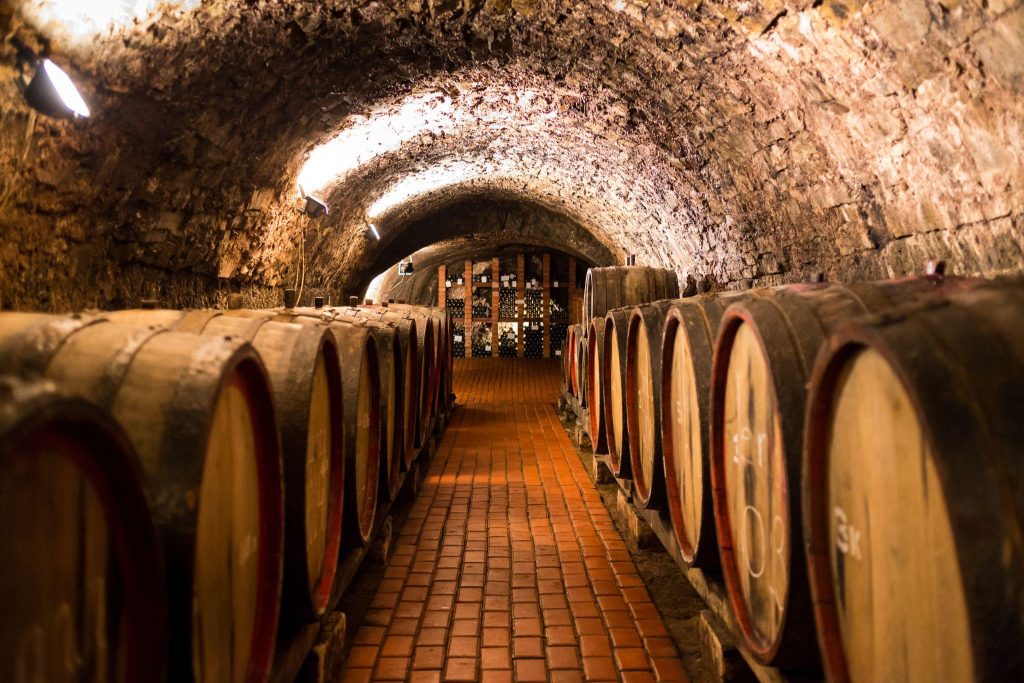
When Port wine was historically grown and processed in the valley along the river Douro, it would be brought to the seaports at Porto and exported across Europe, thus the name. It has a sweet and tantalizingly complex flavor, is one of the most famous fortified wines preferred with dinner, and comes in three varieties.
Ruby doesn’t tend to age and stays bright red and fruity due to the lack of oxidation. This upbeat and jovial flavor is terrific for sampling throughout any hour of the day. Tawny is mellowed and nutty with age due to years spent oxidizing and evaporating in wooden barrels. This is the preferred variation for dinner or dessert. And Rose, a recent creation from 2008, is a Ruby wine brewed like Rosé wine. It is a sweet and berry-flavored wine with a beautiful pink hue.
While you can enjoy wine tasting at many cafes and markets across Porto, the world-famous Douro Valley is just an hour and a half away from Porto and is known as one of the most beautiful wine regions worldwide. Referred to as the port capital of Porto, the breathtaking Douro Valley is worth the road trip, whether you’re a wine drinker or not! You will find several independent wineries in Douro Valley, whose fields slope down towards the beautiful Douro River.
9. Shop At The Livraria Lello
If you love books or important historical sites, there’s no better destination for a day trip than the Livraria Lello. This is one of the oldest bookstores in Portugal, having been founded in the late 1800s. While it has recently experienced an uptick in fame due to tenuous rumors of inspiring the Harry Potter series, the shop has long been famed for its incredible selection, architecture, and history.
When you enter the shop, you’ll be greeted by gorgeous wooden shelving and a magnificent staircase in the center of the room. The books and staircase complement the room with rich jewel tones, and turquoise accents on the arches add a gorgeous burst of color. The only caveat of visiting is that, in recent years, the Livraria Lello has become quite busy — and you’ll need to purchase a 5 Euro ticket to shop or explore.
10. Climb the Torre Dos Clérigos

Lastly, it’s fair to say that you can’t finish your visit to Porto city without admiring it from one of the best views — and there’s no better view than at the top of the Torre Dos Clérigos. Since opening its doors in 1763, the Torre Dos Clérigos has become one of the most famous attractions in Porto due to the incredible view of the city it offers.
The Torre Dos Clérigos is the tallest landmark in Porto, with over 225 steps to be climbed before you can admire the view from the very top. From the outside, the Torre Dos Clérigos is magnificently tall with all the elegance of a historic bell tower, and you’ll love the view as you approach the tower just as much as you’ll love the view from the top!
To climb the Clerigos Tower, you’ll need to pay a small admission fee of 5 Euros to enter. Aside from the view, you’ll also enjoy touring a small museum at the tower’s base. And while the staircase upwards can feel somewhat claustrophobic, you’ll thank yourself for giving it a try when you enjoy an entirely new perspective on Porto.
Bonus: The Porto Cathedral
We couldn’t close out this article on the best things to do in Porto without mentioning the Porto Cathedral. This Roman Catholic cathedral is located in downtown Porto and can be seen from all over the city. One of the most famous, not to mention beautiful buildings in town, the Porto Cathedral is one of the can’t-miss spots when visiting Porto.
You can enter Porto Cathedral for free, where you’ll be able to access some of the best views in the city. This national monument is a reminder of Porto’s fascinating and diverse history.